
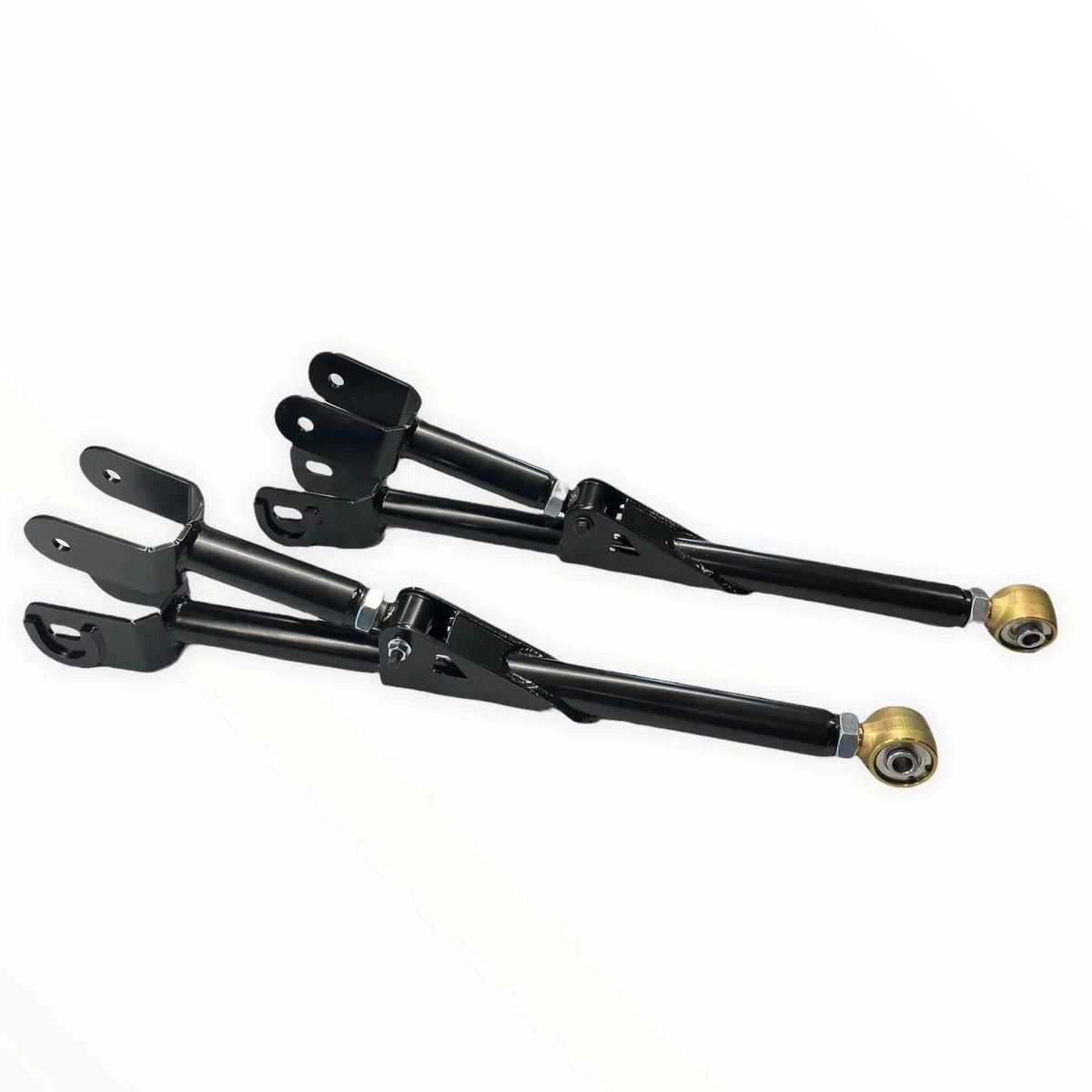
Why 2005–2022 Ford Super Duty Trucks Need Adjustable Radius Arms After a Lift
A lift changes more than the stance of a Ford Super Duty. As the front axle moves away from its factory position, caster, axle placement, and steering feel can all move with it. That is why a properly chosen set of adjustable radius arms is more than a strength upgrade. It is a way to bring the front suspension geometry back under control.
What Changes When You Lift a Super Duty?
On a 2005–2022 Ford F-250, F-350, or F-450 Super Duty, increasing ride height changes the relationship between the frame, axle, and steering components. The axle can shift forward or backward in the wheel opening, caster can move out of its preferred range, and the truck may feel less settled on the highway. Those changes can show up as wandering, slower steering return, uneven tire wear, or a truck that no longer feels as precise as it did before the lift.
What Adjustable Radius Arms Solve
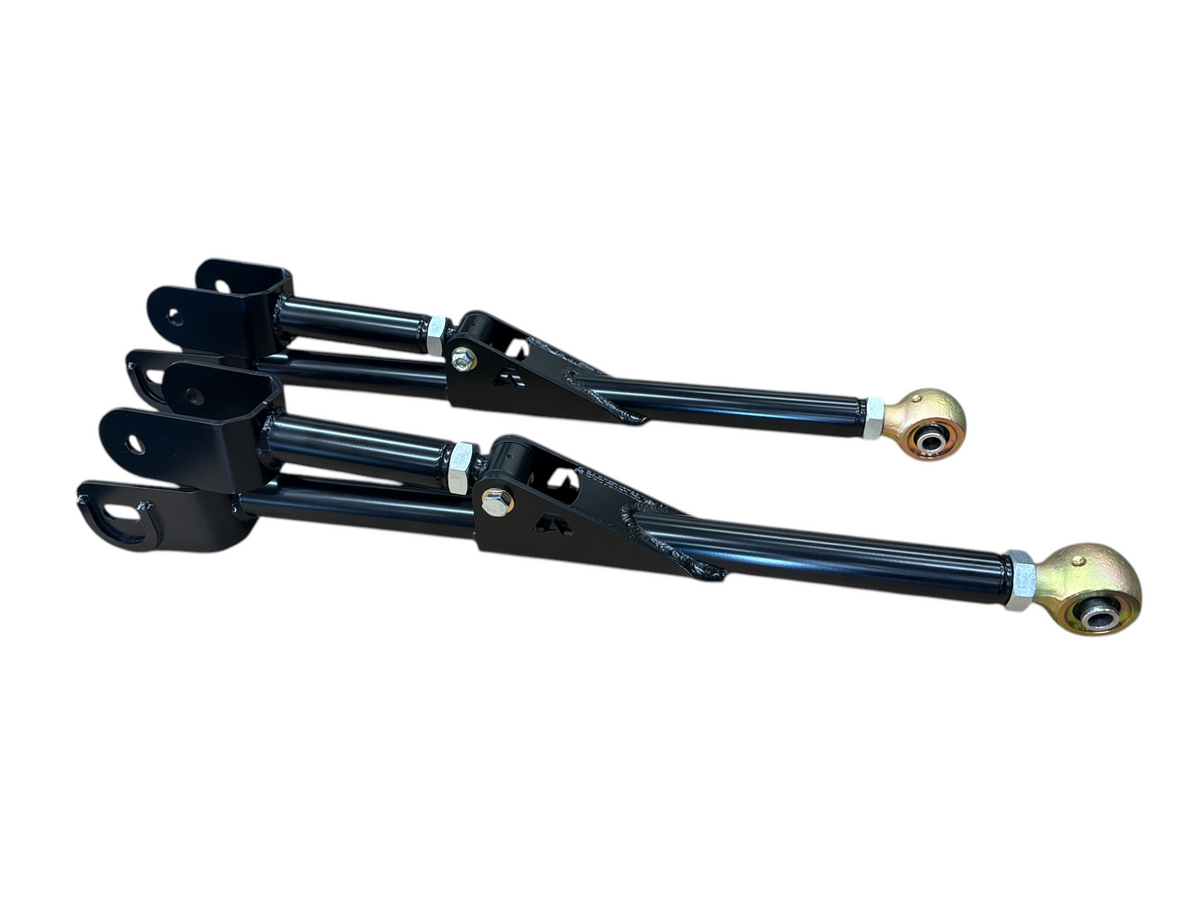
Adjustable radius arms give you the length and adjustment range needed to position the axle correctly for the truck’s lift height. They also provide a practical way to fine-tune caster after the arms are installed. The goal is not simply to make the arms longer. The goal is to build a suspension setup that keeps the axle centered, supports stable tracking, and gives the alignment shop the adjustment range it needs.
Use the Correct Length for Your Lift
Arm length should be measured center-to-center and set before installation. The main tube is the longer lower radius arm, while the upper short bar is the secondary upper link. Use the measurement that matches the actual lift height rather than treating one setting as a universal fit.
| Lift Height | Main Tube, Lower Bar | Upper Short Bar |
|---|---|---|
| Stock | 34 3/4" | 15 1/16" |
| 2" | 35" | 14 1/2" |
| 3" | 35 3/16" | 14 1/8" |
| 4" | 35 3/8" | 14" |
| 5" | 35 9/16" | 13 9/16" |
| 6" | 35 7/8" | 13 7/16" |
Set both arms on the bench before installation, lock the adjusters securely, and leave final fine-tuning to the alignment process.
Why the Flex Joint Matters Off-Road
Uneven trails, ruts, rocks, and cross-axle terrain ask the front suspension to move through more articulation than a smooth highway ever will. The flex joint allows the radius arm to follow that suspension movement with less bind, helping the axle articulate as the truck works over rough terrain. That added freedom of movement can help keep the suspension working instead of forcing every bump and twist through the arm, mounts, and chassis.
That articulation is useful without giving up the adjustability needed for proper street manners. Set the arm length for the lift, establish the caster during alignment, and keep the flex joints greased with silicone-compatible grease. The result is a radius-arm setup that is ready for trail movement while still supporting predictable on-road handling.
Caster Is the Handling Number to Watch
Caster is what helps a lifted truck track straight and return the steering wheel toward center after a turn. For this Super Duty setup, the installation reference range is 3.5 to 5 degrees, with no less than 3.5 degrees recommended. Trucks running offset wheels may benefit from approximately 5 degrees for improved on-road tracking and steering return.
Do not use arm length as a substitute for an alignment. Set the starting length for the lift, then use the axle-side cam alignment bolts for final caster adjustment. A professional front-end alignment is required after installation.
Why Final Torque Must Happen at Ride Height
Suspension arms should be final-torqued with the truck sitting at normal ride height and the full weight on the suspension. Torquing with the suspension hanging can preload the bushings and flex joints, which can lead to premature wear. The Ford Super Duty torque references are:
- Factory frame pivot bolt: 222 ft-lbs
- Factory upper pivot point bolt: 222 ft-lbs
- Supplied axle-side cam alignment bolt: 158 ft-lbs after caster is set
The Setup Details That Make the Difference
Support the truck securely, set the arm lengths before installation, and use a floor jack under the front axle when the bolt holes need to be aligned. At full droop, track-bar geometry can pull the axle off-center. Raising the axle closer to ride height can bring the holes into alignment without forcing the hardware.
After assembly, grease the flex joints with silicone-compatible grease, confirm that brake hoses and ABS wires are not stretched or pinched, and check for rubbing before the first drive. Re-torque the fasteners and inspect the components again after the first 500 miles.
Build the Geometry, Not Just the Height
A better lift is one that drives correctly after the truck leaves the driveway. Correct arm length, usable caster adjustment, a flex joint that can work through rough terrain, ride-height torque, and a professional alignment work together to give a lifted Super Duty the stable, predictable feel it should have.
View the complete Ford Super Duty adjustable radius arm installation guide.
Apoc Industries | Built for properly set-up lifted trucks.


Leave a comment
This site is protected by hCaptcha and the hCaptcha Privacy Policy and Terms of Service apply.